
The Science Behind Wrinkle Relaxer Results That Still Look Like You
Limelight Medical Aesthetics • August 6, 2026
Many people considering wrinkle relaxers in Portland worry about ending up with a stiff, overdone look instead of a refreshed one. At Limelight Medical Aesthetics, this concern comes up in nearly every first consultation.
The truth is that natural-looking wrinkle relaxer results come down to precise science, not luck. Understanding how dosing and placement actually work can make the decision to book feel a lot more straightforward.
In This Article:
- Why Uniform Dosing Creates a Frozen Look
- How Do Wrinkle Relaxers Keep Facial Expressions Looking Natural
- Why Treating the Forehead in Isolation Misses the Bigger Picture
- Why Trying to Fix Results at Home Can Make Things Worse
Why Uniform Dosing Creates a Frozen Look
A lot of the frozen appearance people fear does not come from the treatment itself, it comes from applying the same unit amounts to every patient regardless of muscle strength. Someone with a naturally strong frontalis muscle needs a different approach than someone with a smaller, less active one. When dosing is not adjusted for that difference, the stronger muscle group can end up fully immobilized while surrounding areas barely change, and that imbalance is what reads as artificial.
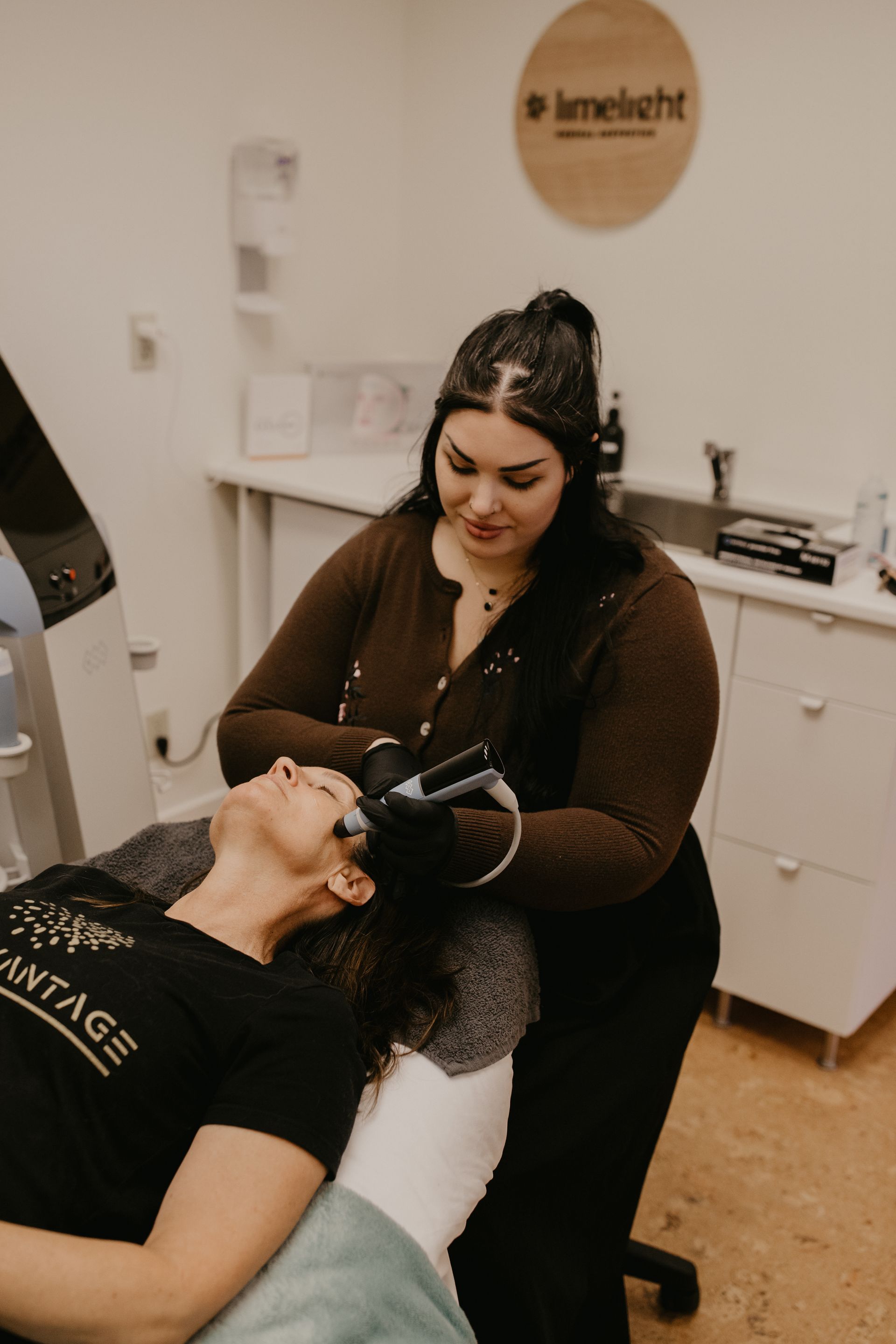
At Limelight, Dr. Tyler Darnell assesses muscle movement and strength before determining placement, rather than defaulting to a standard unit count. That individualized approach is the actual fix for the frozen look people describe.
→ A quick tip to remember: a frozen appearance is usually a dosing issue, not a limitation of the treatment itself.
How Do Wrinkle Relaxers Keep Facial Expressions Looking Natural?
Wrinkle relaxers work by temporarily blocking the release of acetylcholine, the neurotransmitter responsible for muscle contraction. This does not shut a muscle off completely, it reduces the intensity of repeated contractions that cause dynamic lines, like crow's feet or frown lines, while leaving nearby muscles free to move as they normally would. That partial, targeted effect is what allows someone to still raise their eyebrows or smile fully after treatment, just without the deep creasing that used to form in specific areas.
Why Treating the Forehead in Isolation Misses the Bigger Picture
The forehead does not move independently from the brow. The frontalis muscle works in relationship with the muscles that pull the brow down, and treating one without accounting for the other can flatten the brow or create a heavy, hooded look that has nothing to do with the wrinkle relaxer being too strong. It has to do with an incomplete treatment plan.
This is one reason Limelight often discusses the upper face as a connected system rather than a single muscle, and why some patients pair wrinkle relaxers with dermal fillers to support brow position and maintain balance across the whole area.
→ A quick tip to remember: natural results usually depend on treating muscle groups together, not one isolated area.
Why Trying to Fix Results at Home Can Make Things Worse
It takes up to two full weeks for wrinkle relaxers to fully settle, and that waiting period is often the hardest part for patients who notice slight asymmetry in the first few days. The instinct to massage the area, apply ice repeatedly, or do facial exercises to speed things along is understandable, but it can actually spread the product unevenly or mask how the muscle is genuinely responding.
The better approach is patience paired with communication. If something still looks uneven after the full settling period, a quick follow-up with your provider is far more reliable than trying to correct it yourself at home.
→ A quick tip to remember: give results the full two weeks before judging them, and let your provider handle any adjustments.
Getting Results That Still Look Like You
Once dosing, muscle balance, and patience are all accounted for, the frozen look most people fear becomes far less likely. Wrinkle relaxers are designed to soften expression lines, not erase expression altogether, and that distinction is what separates a natural outcome from an obvious one.
If you are considering wrinkle relaxers and want a plan built around how your face actually moves, that conversation starts with a real assessment, not a standard number of units. Reach out to Limelight Medical Aesthetics to talk through what a personalized approach would look like for you.
Share This Blog